A BEASTLY Movie Update

26 Jun 2009 In: News, Other Good Stuff!


A couple of weeks ago I had lunch with my friend Alex Flinn at a Greek restaurant in Detroit. We talked about her book, BEASTLY, being optioned for a movie. Well, work has begun. (See my interview with Alex, below.) And just to tantalize you a bit, here’s a link to lead actor Alex Pettyfer’s transformation into the beast.

The movie is due to be released next summer. In the meantime, enjoy the book or Alex’s latest, A KISS IN TIME. (See my sidebar.)


Ciao!

Shutta

Alexandra Flinn, AKA Alex Flinn, has a lot going on in her writing life. Her newest book, A KISS IN TIME, is getting great reviews, and her book BEASTLY is being made into a movie starring Vanessa Hudgens, Alex Pettyfer and  Mary Kate Olsen.   How cool is that?

I recently read A KISS IN TIME and found that its fascinating premise nestled within the comforting framework of the Sleeping Beauty fairy tale made for a read that kept me intrigued. The premise is: what would happen if Sleeping Beauty was kissed by her true love 300 years later, and that true love turned out to be a teenager from modern-day Florida? How would their two worlds collide? How would it end? After all, according to the fairy tale they’re supposed to marry and live happily ever after.  But Jack’s still in high school and not about to be married yet. Now what?

How old were you when you first started seriously writing?

Depends what you mean by “seriously.”  I knew I wanted to be a writer when I was five.  I wrote plays for the kids in the neighborhood to perform when I was 9 or 10.  I started writing a diary and trying to write my novel at 12.  I wrote most of a manuscript for a novel (then lost it) at 19.  I started writing with a real eye toward publication, researching the market, etc., at 29.  My first book was accepted when I was 32.

  What age child do you have in your head?

12

How do you make up names for your characters?

I love names!  It’s one of my favorite parts of writing.

Sometimes, the characters just tell me their names, which is what happened with Jack in A Kiss in Time.  Other times, I think about it more.  Like with Talia the Sleeping Beauty of A Kiss in Time, I found that Talia was one of the names given to Sleeping Beauty in old stories.   She has a whole slew of middle names, which I got from a list of royal names and also, from other names for Sleeping Beauty (Aurora and Rose).

I often consider the meaning of the name.  For example, Kyle (the Beast in Beastly) is named Kyle because it means “handsome,” and after he becomes a beast, he changes it to Adrian which means dark.  The girl in the story is Linda, which means “pretty.”  Kendra, the name of the witch in that story, means magical. 

I consider impressions that names give me, and if I know anyone with that name.  Charlie Good in my book, Breaking Point, was named Charlie because I knew someone who looked just like him in middle school, and his name was Charlie, and I knew a boy named Alex Good in high school.  He used to say his name was spelled, “No E, just plain good,” which I thought was funny.  I have a book called Baby Name Personality Survey, which tells me what impressions the name gives other people. 

I had a really hard time naming my own kids, so it’s fun to get to name more people.

What’s the earliest childhood memory you can think back to? Does it appear in any of your writing?

I can remember REALLY far back, and I remember a lot.  I remember standing in my crib, biting the sides, waiting for my mother to come in.  But my first vivid memory was from when I was three years old.  I remember my mother coming in and telling me we were going to meet the little boy and girl who had moved in next-door.  I was wearing a white dress with red polka dots.  We went over to their house and sat on their back step.  The boy’s name was Peter, and the girl’s name was Wendy (No, I did not make this up after watching Peter Pan), and they were two and five respectively.  I never used it in my writing, but I’ve used other stuff.

Do you wake up in the night with fantastic ideas for books?

Not in the night.  I usually think up story ideas when I’m supposed to be doing something else.  Like, once, I wrote a short story in my head while watching Piglet’s Big Movie with my kids.

Why write a take off on a fairy tale?

Initially, because part of the story wasn’t fleshed out enough for my liking.  I wanted to know more about the Beast, or it bothered me that Sleeping Beauty just got plunked down in another century.  Now, because kids don’t read fairy tales anymore.   They watch the DVD, and if there is no DVD, if Disney hasn’t done it, it’s dead.  You have no idea how many emails I get, asking who the bear in Beastly was supposed to be.  He’s from Snow White and Rose Red, but none of them have heard of that story.  I’m working on a novel now that is all fairy tales that haven’t been done by Disney.  Some of them, even I hadn’t heard of until I started researching.

What is your favorite fairy tale?

Sleeping Beauty was my favorite as a child.  Now, I sort of like adventure stories like The Brave Little Tailor, Lazy Jack, or The Golden Bird, where the hero has to surmount obstacles to gain the hand of the princess.

What do you have hidden in a dresser drawer? (We won’t tell, will we, everyone?)

Nothing.  It’s not that I’m so organized (I’m not), or that I don’t have hiding places (I do).  That’s just not one of them.  And I’m not going to tell you my hiding places because my kids are old enough to go online.

What do your favorite jammies look like?

Grey short gown with an embroidered pink kitty-cat on it that says, “It’s all about me-ow.”

Who would you rather have a date with (given you weren’t married), Strider from THE LORD OF THE RINGS, Dr. Watson, Wolverine, or Simon Cowell? Why?

Simon.  I was a music major in college, and I pretty much agree with everything he says (except when he ridicules the disabled, but I would try to cure him of that).

Have you ever been abducted by aliens? If so, what color were their jammies? And did they tell you the titles of any of their favorite books?

Well, if they abducted me, they must like my books, right?  And they weren’t wearing jammies.  In fact, they all looked exactly like Simon Cowell and were wearing black Tee-shirts and jeans.

Will you name a character in your next book after me?

Um, maybe.  Do you want me to?  How many other people have you asked to do this?

Thanks, Alex! 

(Who knows, maybe we’ll have a spate of characters named Shutta soon.)

Ciao!

Shutta


* Many of Alex Flinn’s books have made the American Library Association’s Best Books for Young Adults lists, as well as Quick Picks for Reluctant Young Adult Readers. They have also received such teen-selected honors as the International Reading Association Young Adult Choices list (Breathing Underwater, Nothing to Lose, and Fade to Black). Flinn’s books seem to appeal to teens who might otherwise prefer not to read, which is the charge of the Quick Picks for Reluctant Young Adult Readers list. Her books have also been nominated for numerous state awards. Breathing Underwater won the Maryland Black-Eyed Susan Award in 2004. Beastly is nominated for the 2009 Lone Star State (Texas) Award.  (Wikipedia entry: Alex Flinn.)

(Alex Flinn author Portrait by J.A. Cabrera.)


I am happy to report that Cyn (who owns an award-winning author site and blogs at Cynsations) agreed to let me interview her to go along with the posting of her new book, ETERNAL, on my site under “Good Books to Share.”

I enjoyed reading ETERNAL. The pace is swift, and the set-up interesting from the get-go. Miranda, the teenage heroine, has a guardian angel. He messes up and she is turned into a vampire. Now her angel has to make amends. But is he committing the ultimate no-no for guardian angels? Is he falling in love with her? ETERNAL kept me turning the pages through a single sitting. For anyone who likes a good love story, as well as for fans of vampire tales.

Cynthia Leitich Smith

book iconHow old were you when you first started seriously writing?

I guess it depends on what you call “serious.” By fourth grade, I was writing poems in my bedroom more evenings than not. I even “bound” them in a homemade book with the help of my mom. By junior high, I was editor of the school paper-a position I had again in high school. By my sophomore year of college, I was spending my summers working in newsrooms. By my third year of law school, I was teaching legal writing. At 28, I quit my “day job” to write fiction for young people.

book icon How many rejections did you get before you got your first acceptance?

I honestly don’t know, but with regard to writing for young readers, my apprenticeship was about two-and-a-half years before my first sale.

book icon How do you make up names for your characters?

With JINGLE DANCER (Morrow, 2000), most of the names are family names. The one exception is “Jenna,” which I simply thought sounded musical with jingle. Quincie P. Morris in TANTALIZE (Candlewick, 2007) is named after Quincey P. Morris in Abraham Stoker’s classic novel Dracula (1897). But beyond that, I often look for variety in terms of syllables, vowel and consonant sounds, first letters, etc. or meanings. The name “Miranda” from ETERNAL (Candlewick, 2009) means “miracle.”

book icon When you write do you like quiet, music, or lots of activity around you?

Increasingly, I prefer sort of neutral music-no lyrics, which I generally tune out. It works like “white noise.”

book icon What’s the earliest childhood memory you can think back to? Does it appear in any of your writing?

I remember burning the silver plate off a gold spoon with a candle flame. I think everyone else was eating pie in the kitchen. And no, not so far.

book iconWhat age child do you have in your head? Is there more than one child there?

It’s very crowded-I have a four, ten, fourteen, seventeen, and a nineteen-year-old.

book icon Do you have any regrets about writing for young readers?

Nope.

book icon What do you have hidden in a dresser drawer? (We won’t tell, will we, everyone?)

Nothing too interesting, I’m afraid. My iPod and the key to my treadmill.

book iconWhat do your favorite pair of socks look like?

They feature tiny Texas flags.

book icon Given that you won’t sunburn, and you have lots of water . . . would you rather walk through Death Valley or Mall of America? Why?

Death Valley-scenery and peacefulness.

book icon If you woke up in the morning and found someone’s shoes in your refrigerator, what would you think?

That the cats were growing more sophisticated by the hour.

book iconHave you ever been abducted by aliens? If so, did they wear socks? What did they have hidden in their zormorpholater? And did they tell you the titles of any of their favorite books?

No aliens, faeries perhaps.

book iconWill you name a character in your next book after me?

Maybe, but I can’t promise he/she will be a good guy.

book icon Finally, let’s end up looking toward the future. What’s up next for you? Anything you want to tell us about?

I just finished (I hope) text revisions on the graphic novel adaptation of TANTALIZE, which will be told from the point of view of Kieren, the werewolf hero. I’m also jazzed about the short stories I have coming out this year. “The Wrath of Dawn,” co-authored by Greg Leitich Smith will appear in GEEKTASTIC: Stories from the Nerd Herd edited by Holly Black and Cecil Castellucci (Little, Brown, 2009) and “Cat Calls” will appear in SIDESHOW: Ten Original Tales of Freaks, Illusionists, and Other Matters Odd and Magic, edited by Deborah Noyes (Candlewick, 2009).


Thanks, Cyn! 

Now to all of you . . . go forth, and read!

Ciao!

Shutta

THUNDER-BOOMER! Makes its Debut . . .

16 May 2009 In: News


TBcovermed


Yay! The newest book, THUNDER-BOOMER! is out. It is illustrated by Carol Thompson, and it’s been getting rave reviews. Yes! One always worries about how a book will be received. This one, so far, has gotten two starred reviews, the first in Kirkus Reviews, and the second in School Library Journal (June, 09). These are two of the major reviewing journals for libraries, schools, and bookstores. I can’t copy the whole of the reviews, but below are snippets.

Kirkus reports: *”Vivid imagery . . . dramatic ebb and flow. The child’s engaging first-person voice propels the account of the storm.”

SLJ says: *”Thompson’s illustrations . . . are full of motion . . . . The free-verse storytelling is light, airy, and perfectly matched . . . . The ending fully satisfies . . . .”

Doing the happy dance in Ann Arbor!

Shutta

NOTES FROM KIDS !

6 May 2009 In: Random Thoughts, The Writing Life

It’s so much fun to get thoughtful notes from young readers. At a recent visit to Cook Elementary School in Midland, MI, the kids had put up notes around posters of each of my book covers. (Beautifully hand painted by volunteer, Leigh Young.) Here are a few of my favorite notes. What fun!

imageI LOVE it that the schools are teaching about passion, voice, style, etc. in 2nd grade! And “the spaces between the words” mentioned by 1st grader Lilly . . . well . . . I’ll have to think about that one.


Enjoy!

Shutta


Well . . . I did make it through the 30 Days, 30 Poems (& 30 Forms)* challenge for National Poetry Month with some semblance of a brain left over—I think. And though there were many days I would come home late and still have to check in to get the prompt, I could usually figure out a form to use. Also, I’d kept a couple of short forms for those days when I knew I would be away from home.

What did I learn from doing this?

–that writing in a more formal style than I usually do can be challenging and fun.

–I found a few forms I really like a lot.

–writing a sonnet is not as horrible a task as I thought it might be.

–that some forms are awkward fits to the theme of a poem.

–some forms, esp. those that require refrains, fit other themes perfectly. (Such as “raging at the gods.” The refrain feels like one is raging.)

–a refrain has to be a great stand-alone line for it to be heard repeatedly in a poem and work well.

What did I get from doing this?

–a little more confidence in myself and my ability to work within given constraints.

–a few great lines.

–fewer good poems, but some excellent drafts that I can polish. (Some will need to have their forms changed.)

–a sense of being able to work under pressure.

–pride in having finished such a challenge with the added constraint of the forms/techniques.

–a broader sense of being part of a community of poets.

– tired fingers, tired brain . . .

–a great deal of satisfaction.

Would I do it again? You bet!

 *NOTE:  The 30 Days/30 Poems/30 Forms page has been taken down. (These were primarily rough drafts, necessarily written in less than a day. I left them up for the month, and then took them down to polish some of them. Email me at:  shutta AT shuttacrum DOT com if you’d like access to any of the poems you might have seen during the month. Thanks!)

Happy Poetry . . . Keep Writing!

Shutta


I thought I’d take a few moments to catch my breath and make a few comments about what I’ve gleaned, thus far, from participating in the Writer’s Digest National Poetry Month challenge. Robert Brewer, who blogs for WD at Poetics Aside, challenged poets to respond to a given prompt everyday for 30 days—thus creating 30 new poems.

I decided—perhaps, a bit too rashly—to add another constraint to the challenge. I would write 30 new poems, one-a-day, using 30 different forms/techniques. (30 days/30 poems/30 forms)* I challenged myself to this, reckoning it would be a good way to force myself to explore some poetical forms I  might not otherwise study.

As of April 19, I’ve written 19 poems using varied formats and techniques. I’ve written a Fibonacci, a kyrielle, a pantoum, a prose poem, a Skeltonic poem, an ode, a rondelet, a roundel, a tanka, a list poem, a shadorma, and Sapphic verses. I’ve used unrhymed distich, Rime Couee’, blank verse, terza rima, ballad stanza, ottava rima, and rhymed tercets.  I just hope there are enough forms/techniques to get me through the month! (NOTE: I have been saving Haiku, found poetry, and an acrostic poem for later this month when I have several gigs that will take me out of town.)

As to what I’ve learned thus far:

1.) It’s fun—though harrowing, at times. It’s like doing a puzzle under a time limit. There are days that I only have an hour or so to get the prompt for the day and get the poem done.

2.) The results: most of the poems are not polished. However, some contain gems that I will polish and work on later. A few are almost polished enough to be presentable. Some are lamentable. (Mere rough drafts.) And it does feel a bit strange to have posted these on my website, as I am used to waiting until I feel a poem is pretty much finished before I present it to others. But I did want to keep these in one spot to see the variety. (I will take them down later.)

3.) I am getting a little better at determining whether the form fits the function of the poem. I am learning this my making myself work with some forms that have refrains/repetition/certain rhyme schemes or meters. And although I am far from a formalist, I found certain forms to be quite comfortable, like the ballad stanza and the pantoum. 

4.) It’s not easy writing to someone else’s prompts. I found these to be uneven—as expected. Some, like writing a love poem, were almost too easy to be much of a challenge and I was grateful to have my added constraint of a form/technique.  Some of the daily challenges were quite good:  like taking the title of a well-known poem changing it to its opposite and writing from that. I love the poem I did as a result. (A take off from Emily Dickinson in the ballad stanza format. See Day 17. )

5.) I discovered some new forms (the tanka, and the shadorma) that I love.

Well, I shall keep on with it—hoping to make it to day 30 with my sanity. At the end, I’ll have a few more notes to add about the pros and cons of participating in such a challenge. In the meantime, enjoy Poetry Month!

And here’s an informative interview Robert did recently with poet Katy Evans- Bush.  

 *NOTE:  The 30 Days/30 Poems/30 Forms page has been taken down. (These were primarily rough drafts, necessarily written in less than a day. I left them up for the month, and then took them down to polish some of them. Email me at:  shutta AT shuttacrum DOT com if you’d like access to any of the poems you might have seen during the month. Thanks!)

Ciao!

Shutta

Tanya Lee Stone

14 Apr 2009 In: On my nightstand, Other Good Stuff!, Poetry

Tanya Lee Stone has another wonderful work of nonfiction out, ALMOST ASTRONAUTS: 13 WOMEN WHO DARED TO DREAM ( Candlewick , 2009). It’s sure to get any thougtful person’s bloomers in a twist and make her want to take to the streets. Tanya writes with passion and precision. Hornbook said of ALMOST ASTRONAUTS, “meticulously researched and thrillingly told.”

Tanya is a well-rounded writer who not only excels in nonfiction (ELIZABETH LEADS THE WAY: ELIZABETH CADY STANTON AND THE RIGHT TO VOTE, and SANDY’S CIRCUS: A STORY ABOUT ALEXANDER CALDER and many others) but also writes riveting fiction such as A BAD BOY CAN BE GOOD FOR A GIRL (Wendy Lamb Books, 2007).

In honor of National Poetry Month here’s a special downloadable poetry tribute to the Mercury 13 women by Tanya Lee Stone.  Enjoy! I did.


Happy April!

Ciao,

Shutta


I love reading—it’s an obsession of mine. But I also love hearing the written word spoken. Last night I attended one of the many poetry readings being held around the country in honor of National Poetry Month. This one was at the Ann Arbor District Library and featured poet Robert Fanning.  (One of the founders of the InsideOut Literary Arts Project in the Detroit schools.) It was so much fun. His voice is wonderful whether imitating Elvis, or a big box store announcing closing time.

Another highlight of the evening was KiKI, a child of about nine, who got up at open mic and sang a song she’d written. It was her first time before an audience. She captured all our hearts . . . (Thank you, Kiki. “It will be alright.”)

Now, since it’s National Poetry Month, I thought I’d repost something I wrote for the SCBWI-Mi chapter newsletter about listening to poetry. (That’s the Soc. of Children’s Book Writers & Illustrators newsletter.)

Enjoy! 

Finding Passion in the Spoken Word

“I would like to walk out of my heart under the wide sky.”

from Lament, by Rainer Maria Rilke


Like a lot of writers I started out writing poetry at an early age. In the 70s and 80s I participated in poetry readings, guerilla poetry (”taking it to the streets”), and I contributed to small literary presses. In addition, I worked as an assistant editor to a local small press that had a national distribution. In short, I was part of the whole “poetry scene” that swelled in the mid 70s. Then life intervened-college, career and family.


In the late 1990s, when I began to consider writing for children, poetry slamming (competitive poetry performance) had taken everybody by storm. I found myself drawn to the spine-tingling energy, the heart-on-the-sleeve emotionalism, and the bittersweet pain that can be conveyed by speaking the written word with passion. I wanted another shot of that rarified 100% liquid silver wordsmithing that I had so adored in my youth.


I attended local poetry readings again, participated in open mic sessions, was invited to read and even had more of my poetry for adults published. This work on adult-themed pieces became a counterpoint to my writing for children-a place where I could tackle themes not appropriate for kids, or use symbols and metaphors that took an adult sensibility to interpret.


Grappling with images, line length, caesuras, rhythm, metaphors, etc. . . . Yes! It was like a homecoming. What delight there truly is in unlocking one’s heart and walking out under a wide sky. Rilke had it right. I’ve stenciled that line of his around a mirror in my home to remind me.


Certainly, some of the poetry you hear at readings may be pretty bad. Some poems you may not understand. And some will keep you awake at night so that the only cure is getting up, opening your journal and writing. However, almost all of it will be either deeply felt, or will gloss our human foibles with the shine of humor.


No matter what you are writing, I urge you to hear our wonderful language spoken in performance. Look locally for colleges, universities, bookstores, libraries or coffeehouses that are presenting poets or hosting

poetry series. Listen and observe. If you’re comfortable in the setting -and most groups are pretty open, supportive, and non-ageist - sign up for the open mic sessions. If it’s a group that meets afterward to critique each other, listen.


Then go home and walk out of your heart by writing a poem.

Keep wordsmithing!

(And don’t forget to keep up with the National Poetry challenge: 30 poems/30 days. And if you’re poetry-addled, like me, 30 forms, as well!)

Ciao!

Shutta


Call me fruity, idiotic, insane, kooky, lunatic, mad, maniacal, mental, moonstruck, or nutty as fruitcake . . . still, I’m having fun (So far!) and learning a great deal. In addition, I’m unblocking some of the creative flow.

Not only am I taking the 30 Days, 30 Poems challenge at the Poetry Asides blog (Writer’s Digest), where the poem prompt for each day is given. I am also challenging myself to use 30 different poetic forms.  Are there 30 forms? Not sure, I think so.  (I know, I’m completely off my rocker!)

This will be difficult for a person who normally does not use rhyme in her stand-alone poems. (I do in my picture books.) Today I used an Ottava Rima. This is an Italian form that is 8 lines long, usually iambic pentameter (5 iambs—a soft & a hard beat—and thus 10 syllables long). It has a rhyming scheme of abababcc.  Wow!

Yesterday’s poem was a Fibonacci poem. That was fun, though relatively easy compared to today’s.

You can read my poems here or click on the “Poet’s Corner” logo in the right-hand sidebar.

How are you challenging yourself?

Happy Poetry Month!

Shutta

OLYMPUS DIGITAL CAMERA

Welcome to my website and blog!


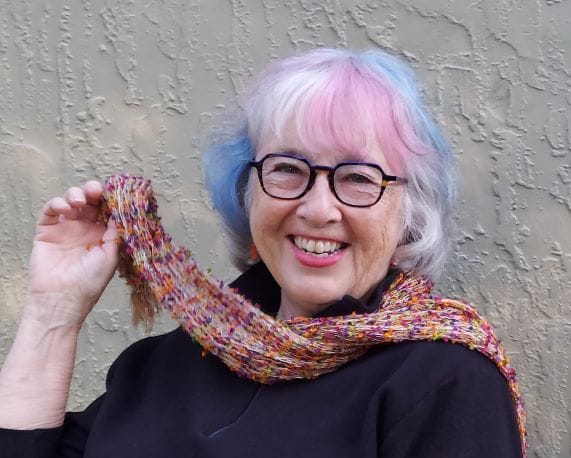
Shutta Crum writes books for children and poetry for adults. She is also a storyteller, a lecturer and a librarian. In addition to her current nine books she has four forthcoming books. Several of her articles about teaching and writing have appeared in professional journals. In 2005, she was honored by being one of eight authors invited to the White House for the Easter Egg Roll.


Three starred reviews for my newest title! (Kirkus, Horn Book Magazine, and School Library Journal) Published by Clarion (HMH), illustrated by Carol Thompson.

Shutta's Latest Slide Shows

Post Categories

Archive of posts

TWEETS

    follow me on Twitter
    Widget_logo
    Visit the Home of the Fightin’ Bookworms!